Pupils sign in as individuals on their own device, and from this are automatically able to access all the Microsoft365 tools for their learning. They can then work in school or at home on the web and desktop apps to complete their work. Everything that children need to access is available through either SharePoint (like a traditional Intranet of web pages) or through the Microsoft Teams app. They are fully integrated, so either route access as all your child’s work, any resources and lesson support the teacher has shared, and all of their class and club activities.
Pupils use the same login to work on their device as they do to sign into their online tools, in the form of Microsoft 365, the latest version of the Office suite. They can then work in school or at home on the web and desktop apps to complete their work. As part of this suite, pupils access their class ‘team’ within Microsoft Teams, which allows them to work in their class OneNote notebook, save and open their work, access and submit class assignments, and communicate with their teachers and peers on their work. The M365 suite is completely safe and can only be accessed by those with a school account. Pupils and staff regularly complete work with pupils in their year across the schools. It includes:
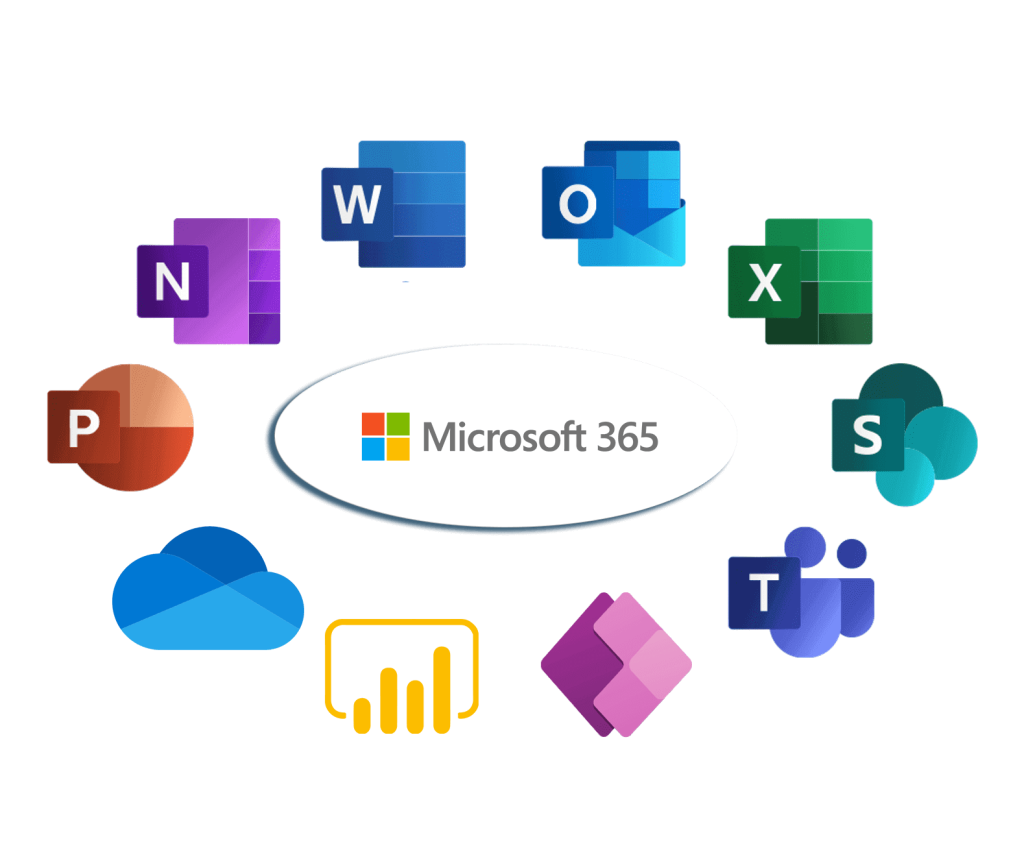
Word, Excel and PowerPoint are traditional creative apps allow pupils to create documents and presentations.
Teams is a learning platform, with channels and chat for teachers and pupils to communicate with their class, assignments, and shared resources such as a class notebook.
OneNote OneNote is a notebook app, which allows teachers to share their whiteboard pages and pupils to access them themselves, alongside their own notebook areas that only they and their teachers can see.
Stream Many lessons, assemblies, events and performances are recorded in school, for pupils to play back later. The Stream platform organises these videos for pupils.
Sway, Forms These modern apps allow pupils to create and publish online work and create forms and surveys for others.
Viva Engage Viva Engage (previously Yammer) is a news sharing tool, with many social features. It allows teachers and pupils to publish their work within the school community and view others achievements.
What is Viva Engage and why we use it?
Viva Engage is one of the apps within the Microsoft365 (M365) suite of tools. It is a portal that everyone within our M365 platform can view and share their news to, although this is within predefined groups called ‘communities’. All learners and adults within the Trust can access it as part of their Microsoft Office login. It is however locked down within our Microsoft tenancy, meaning like other Office apps, it can only be accessed by children and staff within the Trust. It has traditional social media features but there is no advertising or algorithm targeting selected content pushed at users. We have utilised this for staff to share and celebrate the achievements of children within communities we have set up. Students can also share their own achievements within the communities they are part of. This is used in a similar way to sharing their work and achievements on display boards in the corridors and classrooms or in an assembly. Others can comment and like each other’s work. We teach children to use this sensibly and when they post in ways that are not kind we address this with them,
as we would do in any other context.
What is Teams and why we use it?
Microsoft Teams although a suite of business tools is one of the DfE approved learning platforms that has many specific education features, such as the assignment tool. It is the central tool within the Microsoft365 (M365) suite of online and desktop tools bringing together many of the other apps within M365. It allows teachers and pupils to share work, collaborate on documents and message about learning. It also has features to video call and enables children to join group calls, allowing lessons to be streamed, recorded and shared across the schools. It has two types of chat; chat within Teams channels and group chats. We have established channels for specific subject materials and encourage the threaded dialogue within these channels. When children are collaborating in a group, they are more likely to use a group chat.
How is the Trust teaching children to behave respectfully online?
Through the 1:1 device programme and use of the Microsoft learning platform, learning often has a digital aspect. It is this ‘lived’ experience that brings lessons about safe behaviours and healthy digital habits to life for pupils. In our experience theoretical learning has little impact or stickability for pupils. We do use specific education materials to support their understanding of the importance of acceptable behaviours online and how to keep themselves safe online. We have published information around this to our website. We teach children about protecting themselves online using many different resources provided through CEOP, NSPCC and the SWGfL. Our web site has lots of valuable information in it and links to these materials. Each year we run a parent awareness session around these resources and our approach.
How does the Trust manage the use of Viva Engage?
Both teachers and pupils can share what they have learnt and achieved for others to see. This happens in community groups which they are part of, such as their school, year group or a club or squad. We control who is part of these groups and we have disabled direct messaging so responses by a child or staff member are seen by everyone in that group. We have been through this process and worked with staff around the importance of them reviewing the posts made and where needed removed posts whilst teaching the children about acceptable behaviours when posting. We are also ensuring children post in the right community. What children type is logged and where there are things of concern the logging software alerts staff of what has been typed. Whilst there have been posts that parents have highlighted with us which are not acceptable these behaviours have been addressed by teachers with the children to ensure there are clear expectations for online behaviours.
Is this a new tool and shouldn’t I have given permission for its use?
No, although previously called ‘Yammer’, Viva Engage has been part of the Microsoft suite for many years and has been used by the Trust with children for approximately the last fifteen years. The Information Commissioner’s Office (ICO) through our Data Protection Officer (DPO) has confirmed that consent is not required for its use. This is because Viva Engage does not fall within the scope of ‘Information Society Services’ as defined in Article 8 of the UK GDPR.
For this purpose, we rely upon Article 6(e) of the UK GDPR. – ‘Processing is necessary for the performance of a task carried out in the public interest or in the exercise of official authority vested in the controller’. As a Microsoft showcase school and a committed advocate for the use of technology to support learning and development, we view Microsoft 365 and its full suite of applications as essential tools in delivering high-quality learning and development for our pupils.
So what has changed?
There is an increased public awareness and discussion around young people’s online life, which is a very good step that we fully support. Additionally, more families have devices at home and more children have devices, often smart phones, that they are the primary user of. This has resulted in more children having access to unfiltered and unmonitored access to the internet on their devices and often they are signing up to a variety of public social media platforms as a result. In our surveys of upper key stage 2 children it shows that this can be a very high percentage of children. There is a growing campaign for smart phones to be banned in schools and many parents are choosing to have a smartphone free childhood for their child. We are fully supportive of parents choosing this for their children, encourage all parents to place good restrictions on their children’s access to the internet on their personal devices and not allowing their children to have social media accounts. The Trust does not allow phones to be on at school and all phones must be handed in if brought to school. We teach children about the age restrictions that are in place for social media accounts. We do see that we have a role in teaching children the digital skills, both the dangers of social media and how to behave online in different environments safely. We believe that our filtered, monitored and moderated M365 learning environment enables us to do this well. Through this review this view has been shared and supported by those involved in e-safety at the SWGfL and by those who are involved in educational research focussed on the use of digital devices in schools.
Is Viva Engage like Facebook, Instagram, etc?
Viva Engage has some similar features to Facebook and Instagram. However, there is no private messaging enabled in Viva Engage, no wider audience outside of the children within their communities, no algorithms that are selecting content to put onto the timeline or any advertising on their timelines. It does however have some social media style features, such as likes, shares and following. This is an aspect that we are aware can create a pressure for children to wish to get a following and feel appreciated through likes and is something that we have worked with teachers on to ensure that they monitor their use and are speaking with children about.
The social media features of likes, shares and following also exist in most of the M365 apps including Teams, emails and even Word. This is also true in many other similar digital tools that are available and used both at home and school. As we share the same concerns as parents about children seeking positive affirmation through the ‘likes’ and this can affect children’s self-esteem it is important that we teach children about these dangers, focusing with them on how to give positive and sensitive feedback to their peers and how to form positive friendships. As we prepare them for their futures it is vital role for schools to give children the digital skills, emotional resilience and knowledge of keeping themselves safe online. This includes their mental wellbeing and the ‘lived experience’ of using digital tools for their school work gives teachers the opportunities to address with children how to manage the use of these tools in an appropriate way.
Can pupils post on their own ‘wall’?
Viva Engage (and Teams) are tools for schoolwork. Pupils can post about their learning, but there is no personal wall that others can see. This is a feature that we have now turned off for the children. We are teaching children to post into the Community Groups that they have been added to and to share content about their work, their learning and any personal achievements, both at school and in outside activities. They cannot add or remove others from these communities and they cannot make new communities of their own. We have reviewed extensively what is being posted and there is an overwhelming positive use of the platform where children are proud of their achievements and
providing lovely feedback and praise to each other which has built a strong culture of kindness and support. There are some instances where children have not used it kindly and thoughtfully and on occasions some inappropriate messages. Where this has happened we have dealt with those children individually and appropriately. This is done in the same way that we would with any poor behaviour.
Can pupils chat in Viva Engage?
Viva Engage does not have private chat enabled. When a child clicks on another child’s name or image, they can start a Teams chat, that opens in Teams. The chat tool is for learning related conversations only. If a child is not using this appropriately the teacher will explain this to them. Teams chat is also tightly monitored through a product that we licence called ‘Senso’. This is covered in greater detail below, but the product alerts staff to unacceptable use of chat and anything typed or viewed on their device that is unacceptable. Pupils can share and collaborate on work in school, as well as message about their learning to other pupils and teachers. They also have access to this outside of school and chat messages are monitored by Senso on personal devices too.
A growing number of children outside of school on personal devices have access to messaging apps, such as iMessage or WhatsApp that are not monitored and allow them to create group chats often with people they do not know. This has meant that we have a growing problem of issues happening outside of school that overspills into school on such messaging apps. We would rather the children used the monitored chat feature with Teams so if issues arise between children at home we can work with parents to address this.
How is chat monitored?
In class, teachers are encouraged to actively check children’s conversations and what they are talking about to ensure they deal with concerns with children in the moment. Teachers also have a tool called “Senso Classroom” that shows them the screens of all the children in the class, which they can check regularly too. All devices in the Trust are running in the background Senso (senso.cloud) which both key logs (checks)
what words are written, and the images that are viewed or shared. Where any words or content are flagged, they are sent directly to the leadership team and shared with teachers who act to support the children in the relevant and proportionate way. The Senso flagged content is also reviewed by a specialist at Southwest Grid for Learning (swgfl.org.uk), which provides an additional layer of support on top. This monitored service is purchased by the Trust to ensure there is a rigorous approach to keeping children safe.
Where there are concerns flagged, we deal with this swiftly, appropriately and in the same way as any poor behaviour in school. We will ensure for a serious breach of our clear expectations for the use of their devices, the M365 platform or access to the internet, that we will involve parents and if needed wider agencies. The school’s internet service is proved through Schools Broadband and it is a filtered service.
What about use of chat at home?
As with any online activity at home, parents will set the boundaries and expectations they feel are appropriate for use of a device. Whether you wish your child to engage in chat around their schoolwork with peers at home or not is your decision. Under parent supervision your child is still able to message their friends about their learning if you wish to let them. There is no expectation for any online activity out of school.
We would always encourage parents to use a digital device in a family space, to ensure their children are monitored in its use and to put their own safeguards in place. This would include internet filtering, time and usage restrictions and careful monitoring. We do not agree that primary aged children should have access to the public social media platforms and believe that it is for parents to decide the level
of access from home, when their child should be allowed a mobile phone and what games they are allowed to play. There are many risks associated with gaming too and these often allow children to connect with each other via the gaming chat. Often where we have concerns around the inappropriate use of social media and are having to address these with parents they are typically occurring where children are using apps such as WhatsApp or online gaming chats. The online disagreements or inappropriate behaviours then overspill into school
and we then deal with the ‘fall outs’ that began at home.
We also have noted in our monitoring of Teams that some of the older children are chatting via their school Teams account whilst at home and when gaming. Whilst this is not what we are wishing Teams to be used for by the children at home, it does mean that this is being monitored by our service rather than being unmonitored chat in a WhatsApp group or gaming chat. We provide weekly home learning activities for children to positively engage in and so we hope that parents would encourage the appropriate use of M365 by doing these learning activities at home rather than gaming. This partnership with school through the home learning opportunities being done on a home device will positively focus children on the use it is provided for.
Can parents monitor chat and posts?
We have noted through this review that a number of parents have added their child’s account to their own device for the purpose of reviewing and monitoring the wider use of Teams and Viva engage by all the children. Whilst this decision is perhaps understandable to check what their child is doing, this is not supporting their child in logging in to engage with their home learning and as a result they have used their child’s log on to access our systems. In some instances parents have the created screen shots of children’s posts and messages and then shared these with each other and with us. We must emphasise that this is not allowed and is a misuse of our system and in some instances has resulted in
parents creating images of children, which is not acceptable. We would ask all parents to remove their child’s accounts from their own mobile devices and as outlined above set up a dedicated device, in a family space, and support their child in accessing their school work and the home learning activities.
Why are children able to chat and call each other outside of school?
Some parents have been concerned around the chatting and video calling which happens in an evening. We would strongly recommend that all parents restrict access in the evening and only allow home access to be for their child’s home learning and to shutdown the device when not being for this purpose. We believe that devices should not be allowed in a bedroom, restrictions on times and length of time a device can be used should be implemented by parents on their children’s devices and video calls should be monitored in a family space.
As a reminder the home learning is optional and it is a parental decision as to whether they wish their children to access it.
What if other children are messaging my child?
Online interaction is very similar to playground and real-life interaction. If a child says or does something wrong, then their teacher helps them understand what has happened and sets expectations for their behaviour and the issues are dealt with following our behaviour policy. If this
happens online, the same is true. If your child receives a message they do not want, or at a time that is not appropriate, then please tell the class teacher, who will address it in school. As per above, we are asking for parents to put in place clear expectations for the use of their child’s access at home, so late messages are not seen.
What if my child is messaged by children they do not know, or are ‘followed’?
Occasionally children receive messages from other children in other classes. This can happen if a child is mistaken in the surname of their friend and sends a message to the wrong child, or if they message a friend’s sibling that they believe they know. They are all children within the Trust and all accounts are monitored. In any of our schools the younger and older children play on the same playgrounds, older children support younger children through a range of activities such as family dining, reading in the library, sports leaders on the playground and as such the children within the school sometimes then also connect through M365.
Should I reply ‘as’ my child?
In all situations, please do not reply as your child or browse Teams and Viva Engage as your child. The learning platforms are provided for your child’s use solely, and it is our role together to help them learn these skills with our support. Talking to them about what has happened and getting them to identify who to tell to resolve an issue is a better strategy.
Should I use the Teams app on my own phone?
No, please remove your child’s account from your phone or device so that you are not receiving pupil messages on your own device.
Can’t we just turn off messaging?
We do not believe that stopping access to the communication tools within M365 is a necessary step. We teach children to communicate and collaborate with each other through the project-based curriculum and this supports children in their problem-solving skills, their oracy and their literacy skills. It is important though that we create a safe, moderated, monitored and filtered environment and there are both a clear purpose for their use and clear expectations around how it will be used responsibly and safely. In our experience it is the unmonitored open access messaging solutions such as WhatsApp, Roblox (and other in-game messaging), etc that are very problematic. We support parents in not allowing them to have accounts for these apps on their personal devices outside schools.
How is this aspect of online safety taught in school?
Teachers deliver the nationally endorsed Teach Computing scheme of work (teachcomputing.org) in all year groups. They also use the CEOP ThinkUKnow video resources (ceopeducation.co.uk) across Key Stage 2. Both schemes address online interaction, chat, messaging, safe behaviours and what to do when others do not do the same.
What about the dangers of social media’s addictive qualities?
There is no algorithm targeting content pushed at users in Viva Engage. Pupils see everything from the communities they have been added to. Concerns therefore relate to the negative habit formation that can come from seeking followers and likes, and self-validation from this. Teachers take the opportunities using examples from pupils’ online interactions in their learning and directly teach based on those events. We have also developed a series of lessons that will be delivered in each year group this year, directly teaching children how to understand the impact of notifications, likes, follows, through dopamine and endorphin reinforcement, the effects on them, and how to develop healthy safe behaviours that do not build these harmful habits.
Do pupils have to be online at home?
There is no obligation or pressure to be online out of school at all. The class teacher provides home learning activities in the class notebook and Team which families can chose to engage with if they wish. The activities support ongoing learning (such as multiplication tables, number bonds, spelling rules, etc) as well as current class projects (such as finding out about Ancient Roman buildings) to both revise what has been learnt or prepare for what will next be taught (such as watching a video to pre-learn a concept). These are entirely optional.
Why can pupils video call in Teams in school and at home?
Lessons are often available as a live Teams calls, and teachers across the Trust may work with pupils not in their classroom or school. For example, we have just delivered some Trust wide art inputs to ‘kick off’ and inspire the children for the projects that will take place in their art sessions. These are streamed via Teams from the TV studio to the classes for a year group across the schools. Some subjects are taught by specialist teachers to many pupils across the Trust in this way, such as computer coding. Children also hold meetings as calls about their school projects when collaborating together. Children at home can connect back in if for any reason they were unable to be at school, for example recovering from an operation.
How is inappropriate online content filtered out for pupils?
In school we use the Schools Broadband service (schoolsbroadband.co.uk), as many schools do. This service includes a filter that blocks harmful, illegal and inappropriate content from reaching pupils in school.
Is this a breach of GDPR and Data Protection?
No, our DPO provides advice on data protection matters to over 70 schools across Devon, Cornwall, Dorset and Somerset, and has discussed the use of Viva Engage within primary schools directly with the Information Commissioner’s Office (ICO) (the UK data protection regulator), who has advised that no breach of data protection legislation is considered to have occurred. This is for the following
reasons:-
• The Trust is not relying upon consent as the legitimate basis for processing personal data relating to the use of these applications. We rely upon Article 6(e) of the UK GDPR. – ‘Processing is necessary for the performance of a task carried out in the public interest or in
the exercise of official authority vested in the controller’ for this purpose.
• Having worked with the Department for Education Digital team on policy, supported many schools through the department’s Edtech demonstrator programme, and as a Showcase School & Trust for Microsoft, the Trust is a strong advocate for the use of technology to
support learning and development, the Trust therefore considers the use of Microsoft 365 and its entire suite of applications, to form an integral part of educating our pupils.
• Viva Engage and Microsoft Teams both form part of the wider Microsoft 365 suite of applications, all of which have been subject to due diligence checks by way of a Data Protection Impact Assessment carried out by the Trust’s DPO in accordance with Chapter 4, Article 35 of the UK GDPR resulting in the M365 applications including Teams and Viva Engage being approved for use by both staff and students in schools.
• The Trust is confident that it has appropriate technical and organisational measures in place to protect the personal data it holds. We have secure daily backups of data, a filtered internet service through our broadband provider (Schools Broadband) and a robust process of
monitoring activity on devices through a product (Senso) that logs all keystrokes and then reports to leaders using known keywords and phrases of concern. Additionally, we use the Assisted Monitoring Service through the Southwest Grid for Learning who review the logs and
work with us to address quickly any high-risk concerns. This is in line with the sixth data protection principle – Integrity and confidentiality (security).
• Use of the Cornerstone M365 platform, including Teams and Viva Engage applications, are intended for internal use only, and data is not available on the wider Internet. We therefore do not consider that Article 8 of the UK GDPR in relation to Information Society Services (ISS)
applies. This is further compounded by our not relying upon consent as the legitimate basis for the processing.
• We would refer parents to our Pupil Privacy Notice, which is publicly available on our website, and outlines specifically what pupil personal data we hold and why. In particular, we would refer you to the second bullet point within the section entitled ‘why we use this data’ which explicitly refers to ‘supporting student learning’. We therefore consider that the Trust has fulfilled its transparency obligations in this regard.
• Access to Teams and Viva Engage is restricted to Cornerstone students and staff only and should not be accessed by parents or carers. In this regard, the DPO has reviewed the Acceptable Use Policy currently in situ for parents and students and has recommended that
this be amended to explicitly state that parents and carers are not permitted to browse their child’s Teams and Viva Engage pages. Although we encourage parents to support their children with any log-on issues they may experience and to encourage children to engage with
the home learning opportunities, access to these applications is strictly restricted to students only. We accept that the Trust may not have fulfilled its transparency obligations in this regard and is in the process of reviewing its Acceptable Use policy to address this point. The revised statement will be circulated in due course to parents.
Is there a safeguarding risk to children using Viva Engage or M365?
We have risk assessed the use of M365 and specifically the use of Teams and Viva Engage. We have reviewed the risks with external Safeguarding leads and our aim has been to mitigate any risks to children and young people using our digital platforms through the education of the risks, teaching safe practices, filtering content and access to sites and through careful monitoring. We use our devices and the connected applications with a clear educational purpose to focus children on their use, do not allow them to have un-monitored access and as such focus their time on clear educational purposes.
We provide safeguarding training to staff every year which specifically looks at the risks of social media, gaming and unmonitored access to the internet. We use high quality educational resources to teach children about staying safe online. We have an e-safe committee that reviews all flagged instances of inappropriate language or accessing any unacceptable content and this committee is chaired by the Safeguarding designated Trustee and reports to the full Trust board regularly.
The trust have been a Microsoft Showcase School for over twenty years, meaning we are recognised internationally for innovating in the purposeful use of technology in teaching and learning.
We have also been a Microsoft Teaching School, and a DfE Teaching School, as well as a DfE EdTech Demonstrator School and most recently a NCCE Computing Hub for Devon and Dorset.
For each project we have been not just guiding other organisations on their EdTech journey but working alongside and in partnership and learning from the major thought leaders and companies in this space.
Find out more about the Microsoft Showcase School recognition
Ingredients:
Diced Chicken Breast
Onion
Puree Garlic
Madras Spice Curry Powder
Rapeseed Oil
Spice Ground Ginger
Coconut Milk
Korma Sauce
Boullion Chicken Powder
Peas
Sweetcorn
Cornish Sea Salt
Long Grain Rice
Spice Turmeric
Wholegrain Rice
Nutritional Information
| Nutrient | Portion | Per 100g |
|---|---|---|
| Carbohydrate | 24.96 g | 10.19 g |
| Energy | 270.96 kcal | 110.60 kcal |
| Fat | 10.66 g | 4.35 g |
| Fibre | 1.69 g | 0.69 g |
| Protein | 18.75 g | 7.65g |
| Salt | 0.64 g | 0.26 g |
| Saturated Fat | 5.85 g | 2.39 g |
| Sugar | 4.13 g | 1.68 g |
Allergens Information
Contains: Milk, SO2, Mustard and Wheat